

Trommelscanner - Was ist das?
Trommelscanner - Was ist das?
Technik eines Trommelscanners
Die elektronischen Bauelemente zur Bilderfassung sind Lichtvervielfältigerröhren (auch Englisch Photo Multiplier Tubes oder kurz PMT) – dabei handelt es sich um Lichtsensoren, die bei einfallendem Licht einen elektrischen Strom erzeugen. Sie sind farbenblind, das heißt, es wird nur die Intensität der Farbe, aber nicht die Farbe selbst erfasst. Bei einem Photomultiplier wird das Signal im Gegensatz zu einem CCD-Element verstärkt. Daher verfügt der Trommelscanner über eine größeren Dichteumfang als der Flachbettscanner und kann besonders bei dunklen und sehr hellen Stellen noch Farb- und Helligkeitsabstufungen wiedergeben. Von der Bauart her kann die Trommel horizontal, vertikal oder geneigt angeordnet sein.
Die Vorlage wird auf einer gleichmäßig rotierenden Trommel – meist mittels einer Flüssigkeit – fixiert und punktförmig be- oder durchleuchtet. Dabei bewegt sich parallel zur Rotationsachse eine Abtasteinheit. Sie leitet das Licht der Vorlage über eine Optik und über Farbfilter zu den Photomultipliern weiter. Da Photomultiplier nur analoge Signale ausgeben, wird noch eine Elektronik zu Digitalisierung benötigt. Häufig handelt es sich dabei um eine Steckkarte eines Rechners, die auch die SCSI-Verbindung zur Verfügung stellt
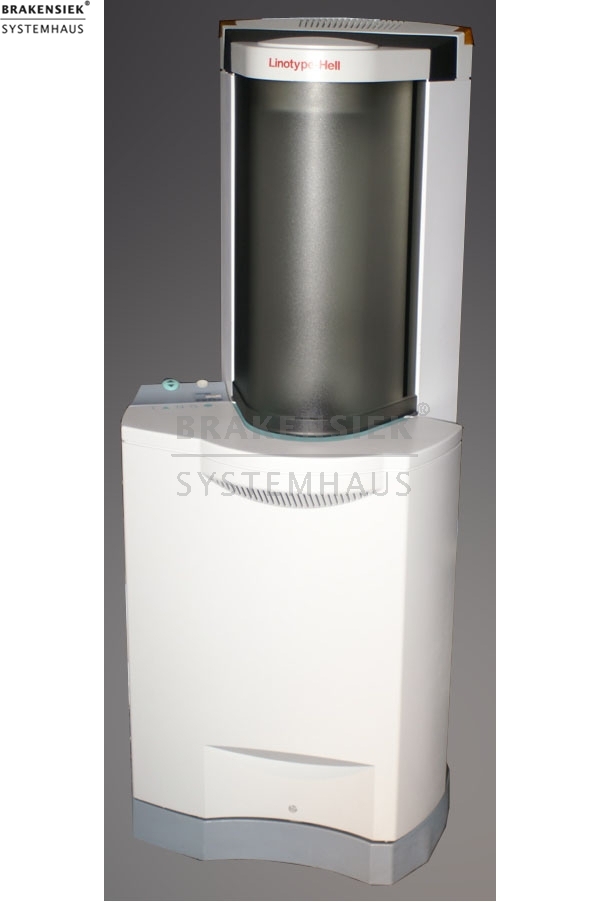
Einer der letzten großen Trommelscannerhersteller war die deutsche Firma Linotype-Hell, welche 1996 von der Heidelberger Druckmaschienen AG übernommen wurde. Die letzte Trommelscannerserie war die Linotype-Hell DC 3000er Reihe. Ein besonders interessantes Model war der Linotype-Hell Tango, bei welchem die Abtastwalze vertikal - im Gegensatz zur üblichen horizontalen Anordnung der Scannertrommel eingesetzt wurde. Durch den abnehmenden Bedarf an "Dia/Film"-Digitalisierungen (bedingt auch durch den Wechsel in der professionellen Fotografie von analoger zur digitalen Technik) verloren die "teuren" HighEnd Scannersysteme immer mehr an Bedeutung. Nach nur wenigen Jahren wurde die Weiterentwicklung der Trommelscannertechnik von Heidelberg komplett eingestellt. Brakensiek Systemhaus GmbH & Co. KG verhilft jenen jedoch zu einem 2ten Leben und hat ein großes Angebot davon am Lager.
Hier eine Liste von bekannten Trommelscannern stammend von:
http://www.flatbed-scanner-review.org/drum_scanner_reviews/drum_scanner_reviews_links.html
Aztek bought what was left of Howtek. The scans Howtek and Aztek did for us several years ago were poor quality. The current models of Aztek are different, but if a company is not willing to provide a scanner for long-range testing, and since we know and trust the ICG, it is the ICG that we recommend, as well as the Screen drum scanner at the high end.
Celare Technologies Budde International sells ScanView high end as well as an unusual entry level ScanMate Magic. We do not know if this brand or model still exists.
Crosfield DuPont changed hands, bought by Fuji. No longer made. If you have a used one, if it works, it ought to be good...until you need spare parts.
Eurocore Scantronix in USA Hi-Scan, 10,000 dpi, several models, Windows version includes SilverFast interface. We do not know if this brand or model still exists. Lots of drum scanner products have totally disappeared in the last three years.
Fujifilm Electronic Imaging Fuji makes industrial strength drum scanners for professional prepress, Celsis 6250 and 5250 inherited from Crosfield. We will check at DRUPA 2004, but based on comments made in 2003, Fuji is moving out of the prepress drum scanner business.
Howtek HiResolve, low end. Test scans were so bad we could not use them without massive repair, but probably if we tried other transparencies and if our own staff could do the test perhaps the results would be better. At least one Aztek seemed to be a Howtek scanner with a different label and different software. The one set of test scans from this were also not useable, but it may have been a problem in the original transparencies.
ICG formerly Itek Colour Graphics, then ICG, then bought by Global Graphics hardware. Reborn as Heights after being in limbo for a year after a management buyout. Models 330i, 360, and 370 drum scanner. Circa end of 2003, ICG reappeared on the scene via DCS Associates, we will report it what we see at Photokina 2004. DCS Associates now owns the original name of ICG so their new web site (as of summer 2004) is ICG.ltd.uk. Contact is Andre Fletcher, andre@dcs-imago.com. Their current model is the ICG 380. We are not able to recommend any scanner we have not used ourselves in-house (we have not used any ICG at FLAAR itself), but the people behind DCS Associates and Colour People are capable and honorable.
Imacon (Denmark) upright CCD scanner. This is not a drum scanner no matter how much their clever and frankly exaggerated ads claim it. We repeat this, this brand is not a drum scanner and ads that claim or use the designation of drum scanner are potentially misleading. If you want a drum scanner, then you do not want an Imacon because it is not a PMT technology.
Imaco (Canada) No relation to Imacon. QCS-4100 Drum Scanner (I did not find this in any published list of drum scanners; fished it out entirely by coincidence). I have no idea if this company still exists.
Isomet 405HR, 455HR, up to 12500 dpi sounds rather high-end. This company fizzled out long ago.
JEI Corporation, Juno Enterprises Corporation. This drum scanner no longer exists.
Linotype-Hell, Heidelberg Tango. The best of the best, but no longer made.
Optronics ColorGetter. We have received complaints about failures in Optronics drum scanner; mute point because the company probably no longer makes these models. But be wary of used ones lurking on eBay. Never buy a used scanner if the company or that model no longer exists.
ScanView Scanmate, various models. Their flatbeds are being sold from stock on hand; whether this scanner is still being developed (in the sense of improved models) is unclear.
Screen USA SG-8060P, 12,000 dpi. No scanner in their booth at DRUPA 2004 but evidently this SG-8060P Mark II drum scanner is still available. This is one of the great traditional drum scanners. We know someone who has a used earlier model, and he likes the results.
Storm, a company in Germany which repackaged scanners from OEM sources; went bankrupt in the USA. They did not exhibit at DRUPA 2004, nor did I hear a peep about them while in Germany.
As you can see, more than half the drum scanner manufacturers went belly up between 1999 and 2002 (most failed in the last two years). Why?
Quaelle: Wikipedia
* Zusicherungen und Markennamen:
Die Beschreibung und die eventuelle Nennung von Markennamen dienen lediglich der allgemeinen Identifizierung der Kaufsache und stellen keine Gewährleistung oder Zusicherung im kaufrechtlichen Sinne da. Wir stellen unmissverständlich klar, dass wir kein Nutzungsrecht an den Markennamen durch den Markeninhaber eingeräumt bekommen haben. Markennamen sind rechtlich/gesetzlich geschützt und dienen hier lediglich der Produktbeschreibung. Die Angaben erheben nicht den Anspruch auf Richtigkeit und Vollständigkeit. Irrtümer und Zwischenverkauf vorbehalten. Die gemachten Angaben, die Beschreibung und die Bilder sind unverbindlich und dienen nicht als zugesicherte Eigenschaft, sofern nicht ausdrücklich erwähnt. Der Verkäufer übernimmt weder Haftung noch Gewährleistung für Tipp- und Datenübermittlungsfehler. Ausstattungen sowie Extras sind gegenenfalls gesondert bei der notwendigen ausführlichen Besichtigung des Kaufgegenstandes zu überprüfen. Änderungen und Zwischenverkauf vorbehalten. Die Artikelbeschreibung stammt von der Herstellerwebseite. Alles was in Zitatzeichen " " ist ist direkt zitiert und bzw oder ein vermuteter Markenname. Bitte kontaktieren Sie uns über das Kontaktformular, wenn Sie einen Markenrechtsverstoß bemerken. Wir werden dann unverzüglich diesen beseitigen.
Ähnliche Artikel

Was sind Google Befehle?
Google Commands | Search Features | Search Operators | search | The most important commands and google google-functions: CACHE: Use this command to see how your site in google in memory Query example:. Cache: brakensiek.de ALLI TITLE: Websites hav...

FAQ: MacBook PRO CD auswerfen
FAQ: MacBook Pro - eject CD When a CD is in the drive of the MacBook, and the ejection of the eject button does not work anymore (eg defective operating system) can use the following trick: - Turn off the MacBook - When you turn the mouse button (b...

How to transfer a Quark, Indesign, Freehand Document via FTP to the PrePress Studio?
Here are some tips for quick and effective data transmission: All images and graphics and fonts used imports are generally used for further processing. Depending on the layout application, these data put together comfortably. Quark Xpress: The Fi...

This requested productsite has moved into a new category (Error four hundred and four)
Dear Visitor, this is a service website of www.brakensiek.com. We update all webpages daily. In oder to improve the usability of www.brakensiek.com the requested website has moved into a new category. Your can find our site notice/imprint here:...
 Unser Partner ist die